


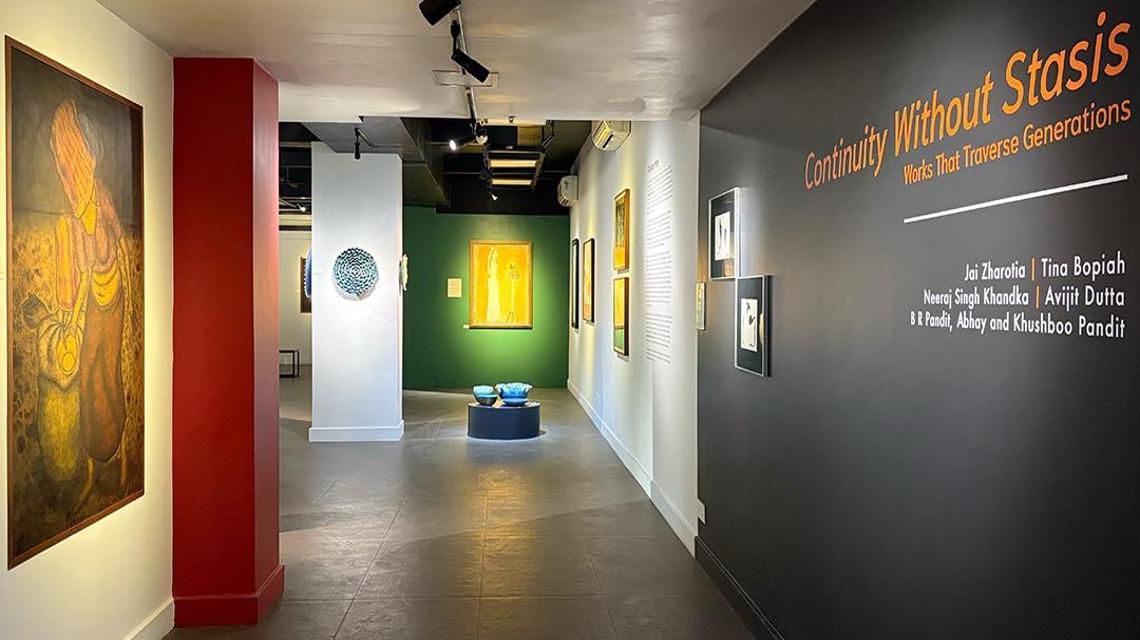
Continuity Without Stasis: Works That Traverse Generations
April 16 – May 29, 2026
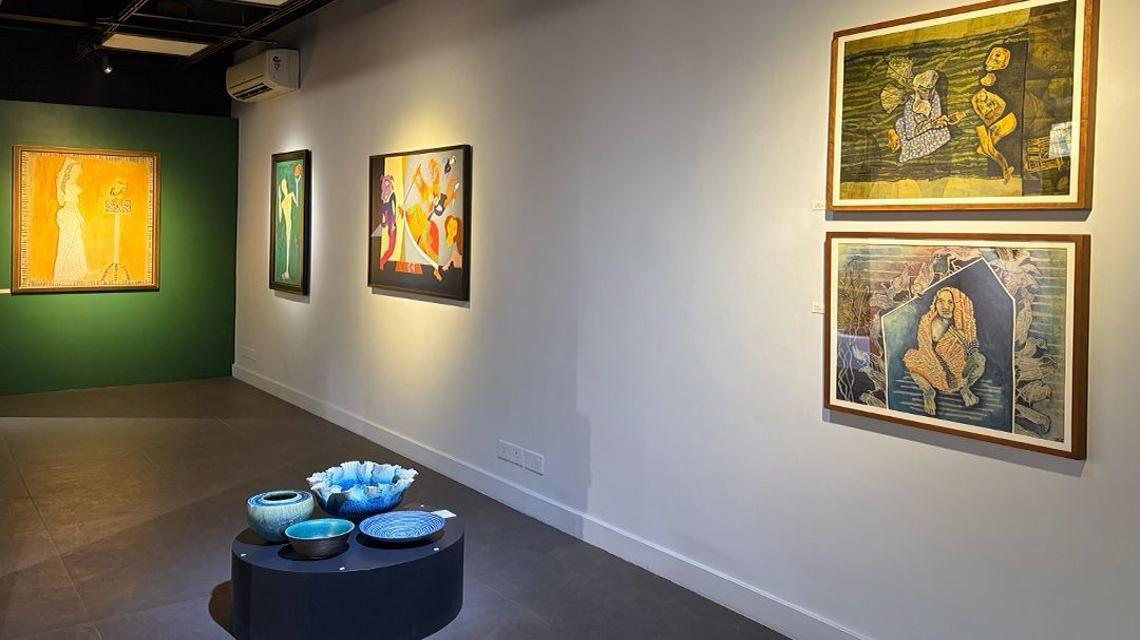
A solo exhibition offers a snapshot of an artist’s practice at a given moment, while a retrospective allows a fuller understanding of its evolution—marking periods of growth, pause, or transition. It reveals sustained preoccupations as well as shifts in inquiry. Continuity Without Stasis brings these perspectives together across multiple artists and generations. It presents the works of Jai Zharotia, Tina Bopiah, Neeraj Singh Khandka, and Avijit Dutta—representing older and younger cohorts—alongside the ceramics of B R Pandit, Abhay and Khushboo Pandit, where an intergenerational dialogue unfolds within a single family over decades.
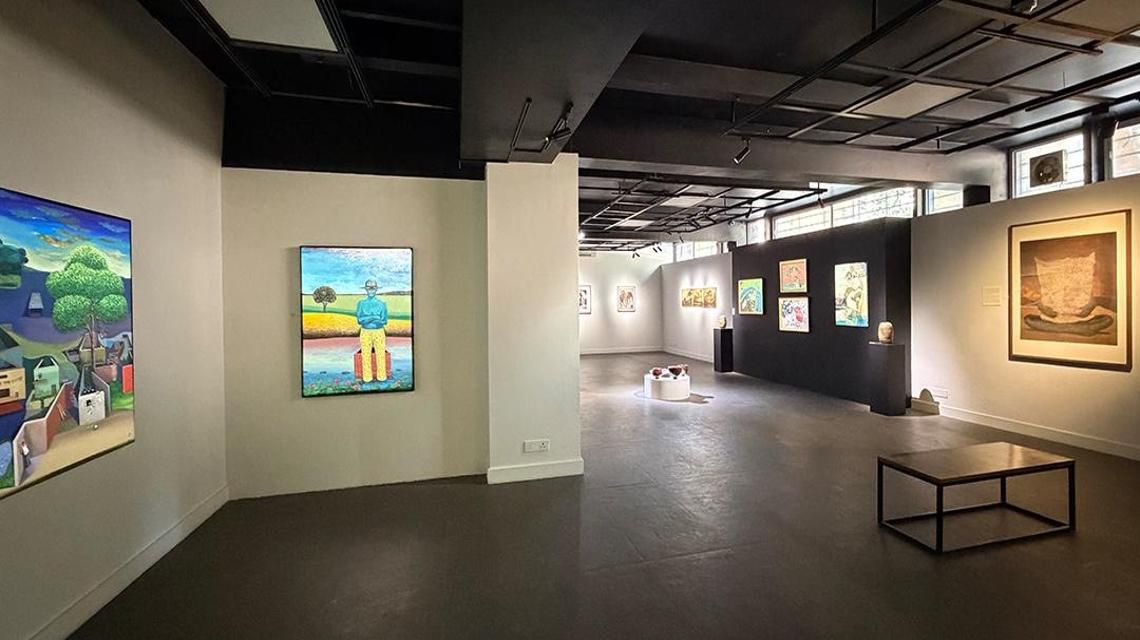
The younger artists engage closely with their immediate environments. Avijit Dutta’s work emerges from the industrial landscape of Howrah, where labor is both subject and material. His use of iron dust, soil, and industrial debris binds the figure to its surroundings, collapsing the distance between representation and lived experience. Neeraj Singh Khandka similarly navigates the tension between past and present, constructing spaces where urban density coexists with residual traces of nature. In both, the self is shaped through proximity to place and its pressures.
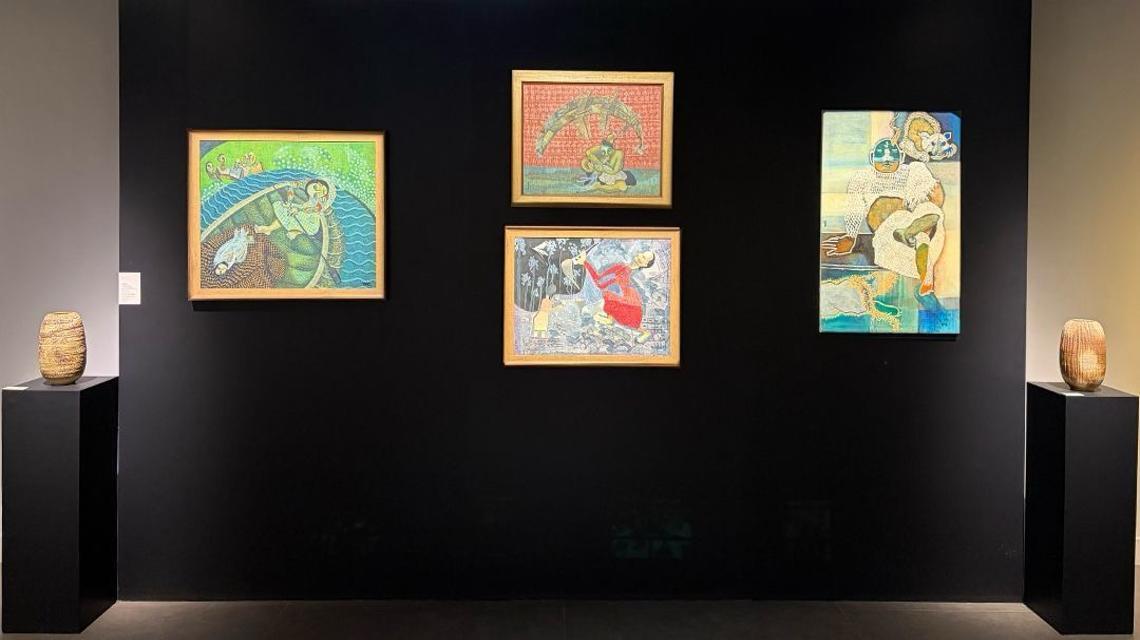
Moving along this arc, the inquiry expands toward both the interior and outward complexity without losing its grounding in lived reality. Jai Zharotia’s practice unfolds through an intuitive, process-driven approach, where forms remain fluid and continuously evolving. It is the outer world conceived of in metaphors. His recurring motifs—horses, clowns, acrobats, hybrid beings—function as mutable presences, carrying emotional and psychological charge within suspended, dreamlike spaces shaped by memory and imagination. In his work the internal and the external playfully interact. Tina Bopiah is invested in interiority, approaches it through a more socially inflected lens. Drawing from personal history and mixed-identity experience, she brings together the intimate and the political, addressing womanhood, religion, and social conformity through layered, psychologically charged images. Her shifting use of materials reflects a practice in constant adaptation.
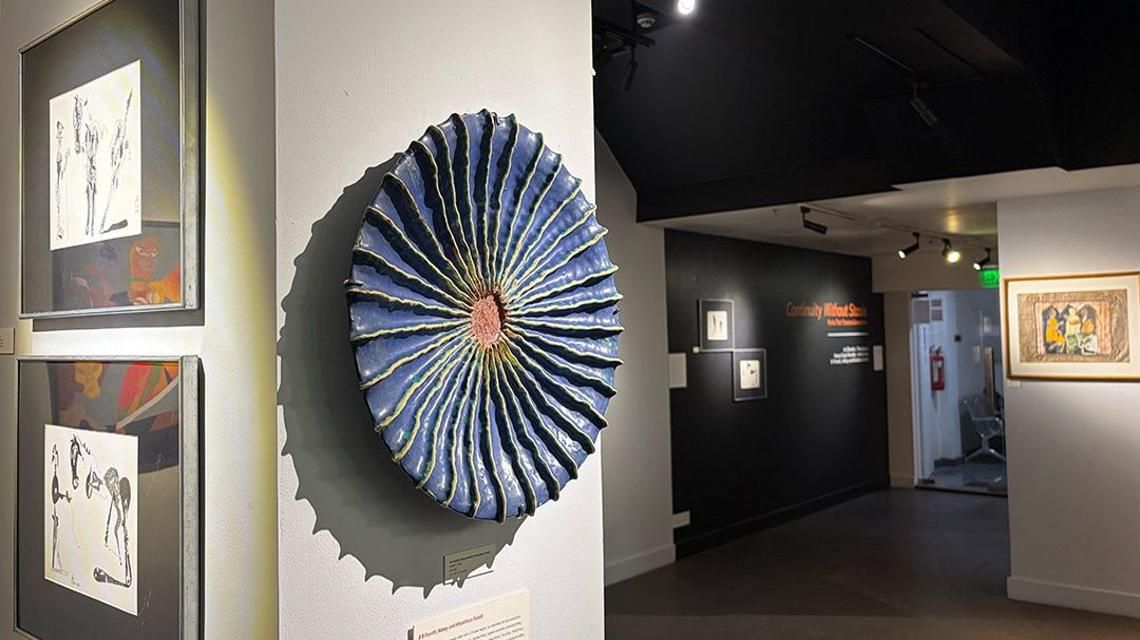
Within this trajectory, the practice of B R Pandit introduces another dimension—situating artistic development not only within an individual lifespan but across generations. Rooted in ceramics, his work reflects decades of sustained engagement with a single medium, where mastery emerges through repetition, experimentation, innovation, and deep material knowledge. This engagement extends into a familial continuum, with Abhay and Khushboo Pandit contributing to and transforming the practice. Here, the arc is cumulative: techniques and sensibilities are transmitted, reworked, and renewed.
What emerges is not a fixed distinction between generations, but a shared trajectory—initial proximity gradually opens into an expanded capacity to hold temporal, material, and psychological complexity.
