


Chronicles of [un]Seen Labour[er]
September 18 – October 31, 2026
A solo exhibition presents an artist with a particular challenge: to demonstrate how a sustained body of work can hold together across different subjects, scales, formats and modes of representation. For a young artist, this also means revealing the evolution of a practice—what has remained constant, what has changed, and how earlier investigations have opened into new possibilities.
Avijit Dutta’s practice is rooted in Howrah, West Bengal, the industrial city where he was born and raised. Its foundries, workshops, railway yards, brick walls and crowded streets form the setting for his sustained engagement with the lives of its workers. Drawing from what he has observed and experienced around him, Dutta chronicles a world shaped by labour: its physical demands, its routines and hierarchies, and the relationships that emerge within and around it.
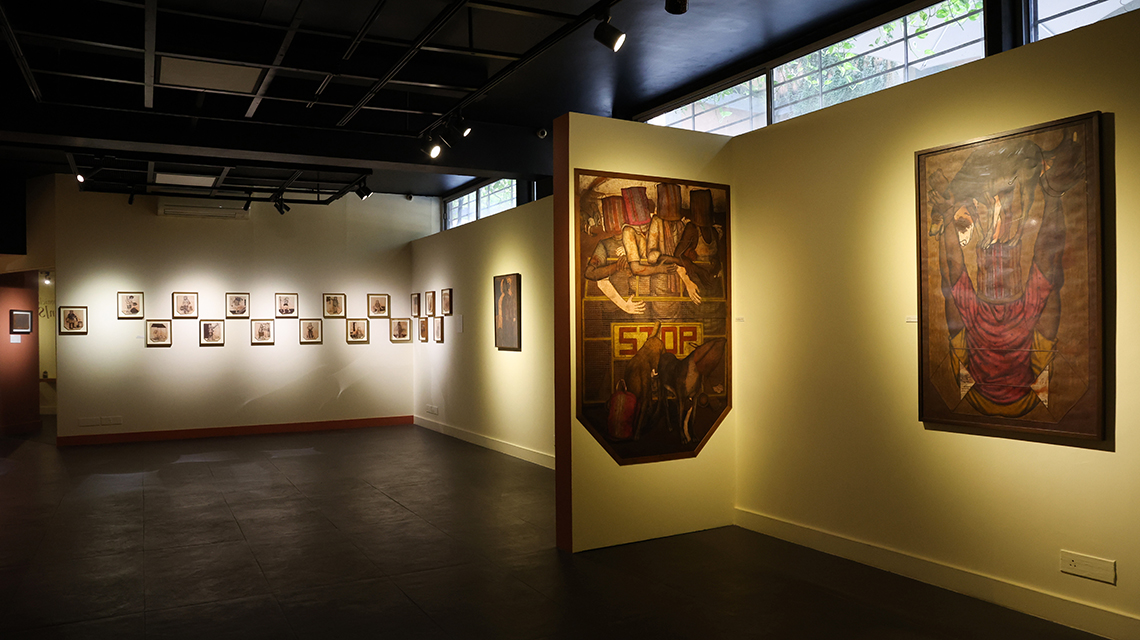
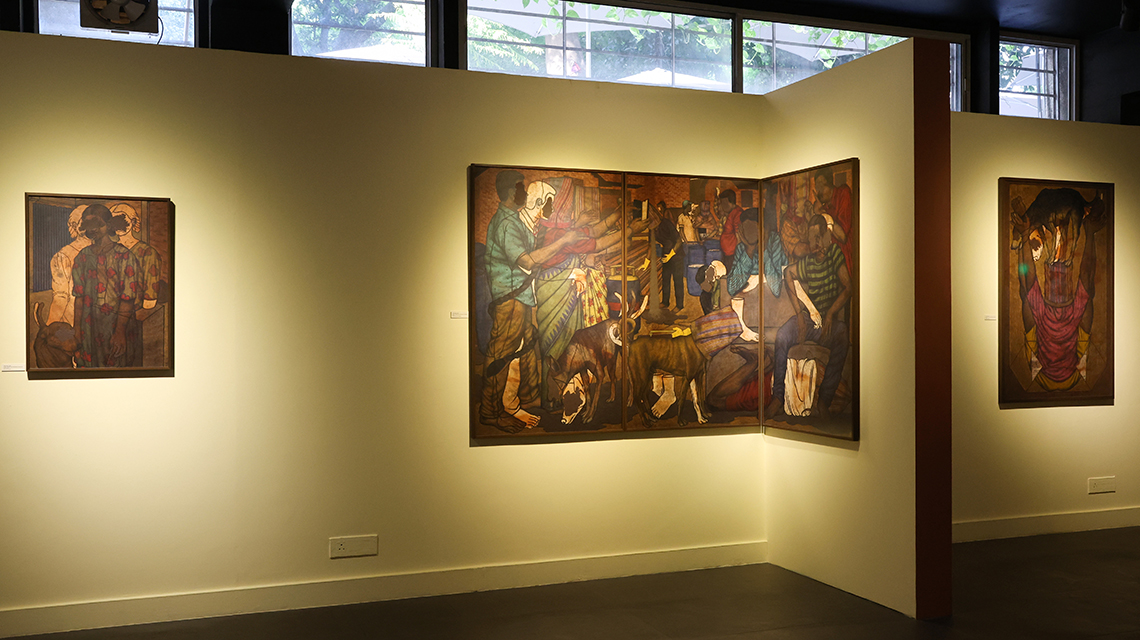
Workers occupy the centre of Avijit’s paintings, yet they are rarely identifiable as individuals. Their faces are concealed beneath thongas, obscured by iron powder, blocked by hands or otherwise withheld from view. This recurring anonymity speaks to the invisibility of the individual within the structures of labour. Yet, as the face disappears, the body increasingly asserts itself. Their physicality becomes a means of asserting presence even as their identities remain unseen.
In addition to the worker’s relationship with the systems of labour, Avijit explores the relationships workers have with one another. His recent works reveal a social world sustained by cooperation and mutual dependence, but also fractured by hostility, indifference and avoidance. Workers may occupy the same space while remaining distant from one another, or witness an encounter without intervening. In these moments, the unseen is not only the individual worker but the erosion of collective solidarity. Social fracture becomes another condition of labour.
Beyond the human figures, Dutta’s works include animals, industrial structures, open landscapes and other elements of the everyday environment. Dogs, for instance, frequently appear alongside workers, while buildings, machinery, roads and stretches of landscape situate human activity within a larger world. These elements are not simply incidental details or settings; they contribute to the atmosphere and social reality of the scenes, suggesting the interconnectedness of people, places and the environments they inhabit. The predominantly earthy and rust-toned palette further draws these different elements into a shared visual field, reflecting the character of Howrah while lending the works a sense of continuity across different subjects and settings. Together, these details expand Dutta’s focus beyond the individual worker to encompass the wider landscape of industrial and everyday life.
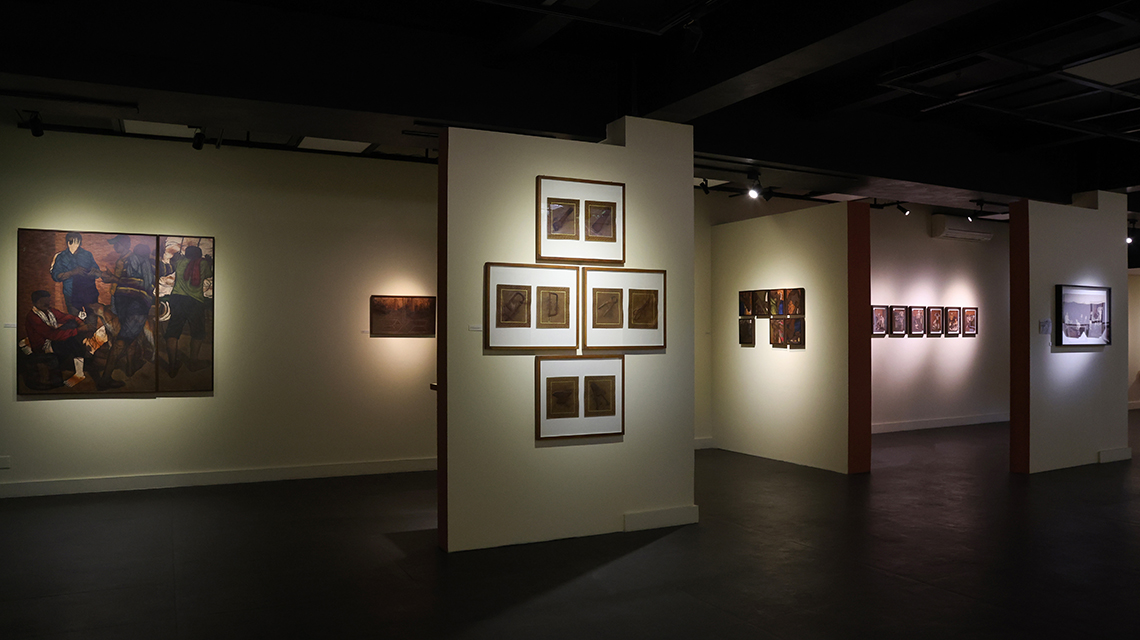
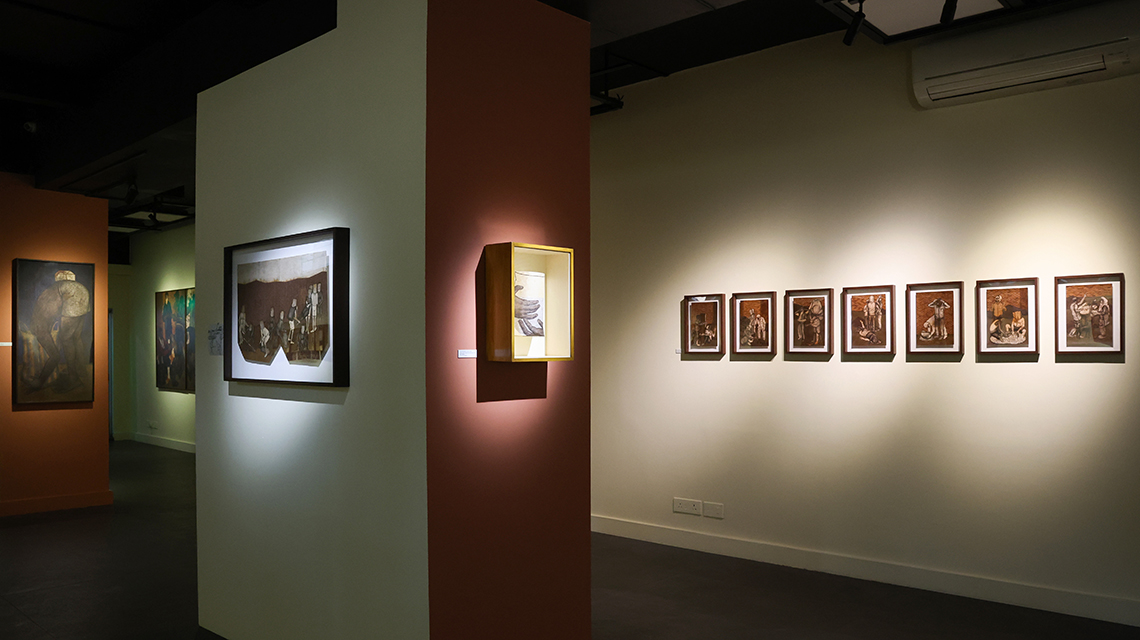
Alongside large, densely populated compositions are smaller works, diptychs and triptychs composed of separate incidents and observations. These fragments do not always form a continuous narrative. Instead, they offer glimpses into a larger, partially concealed chronicle, asking the viewer to make connections between gestures, bodies and encounters. Complexity is built through density in the larger works and through juxtaposition and sequence in the smaller ones.
In this first solo exhibition in a physical space, Dutta presents not a singular account of labour, but a series of chronicles—of work and survival, of bodies and relationships, of solidarity and fracture. While rooted in the particular circumstances of Howrah, these works speak to wider shifts in the conditions of labour, as industrial economies transform, technology reshapes the workplace, and the worker’s place within a rapidly changing world is continually renegotiated. His workers remain unnamed and their faces concealed, but through their gestures, physical exertion and encounters with one another, they emerge as witnesses to lives that are often present everywhere and recognised nowhere.