


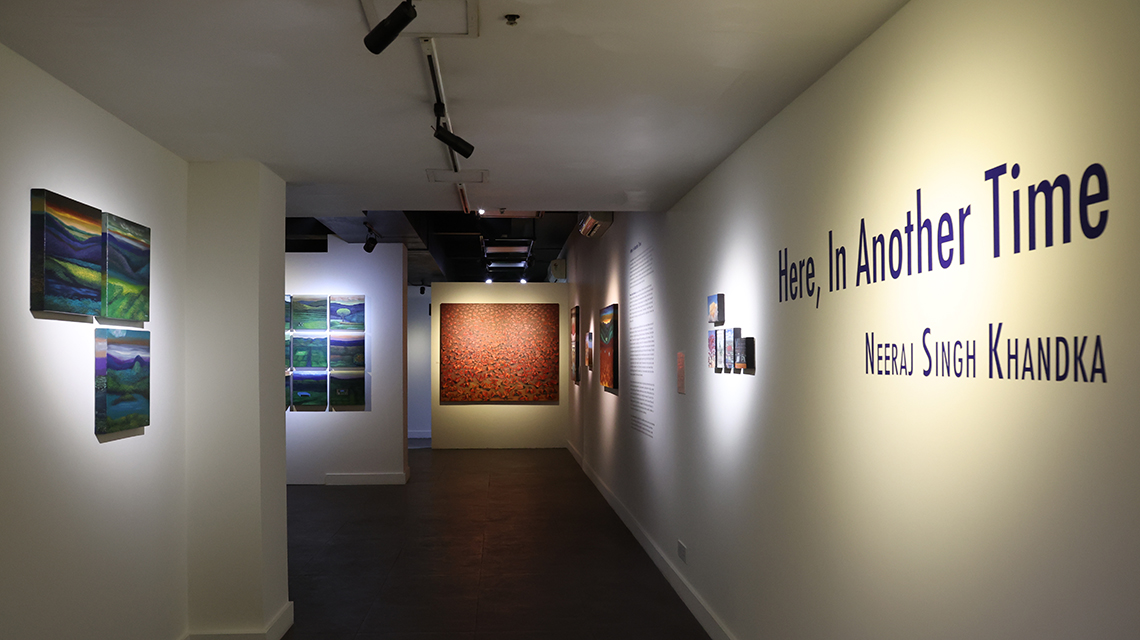
Here, In Another Time
November 20 – January 7, 2027
Neeraj Singh Khandka grew up in Bhimtal, a hill town in what is now Uttarakhand. Although his father’s postings moved the family across India every three years, Khandka spent much of his adolescence in the mountains before settling in New Delhi after his studies. His practice grows out of these transitions. It is an ongoing, almost exhaustive study of the world he inhabits, filtered through memory and imagination, emotion and empathy. Neeraj describes his work as having a “transit nature,” in which things arrive and pass away. His paintings are accordingly never fixed in a single place or moment; they traverse both.
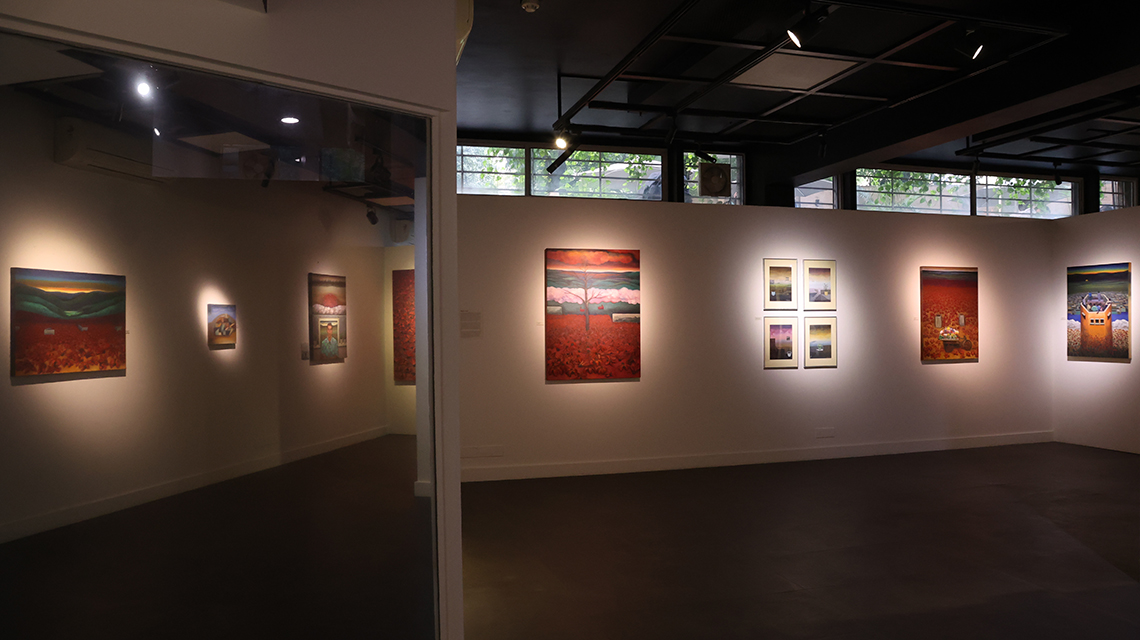
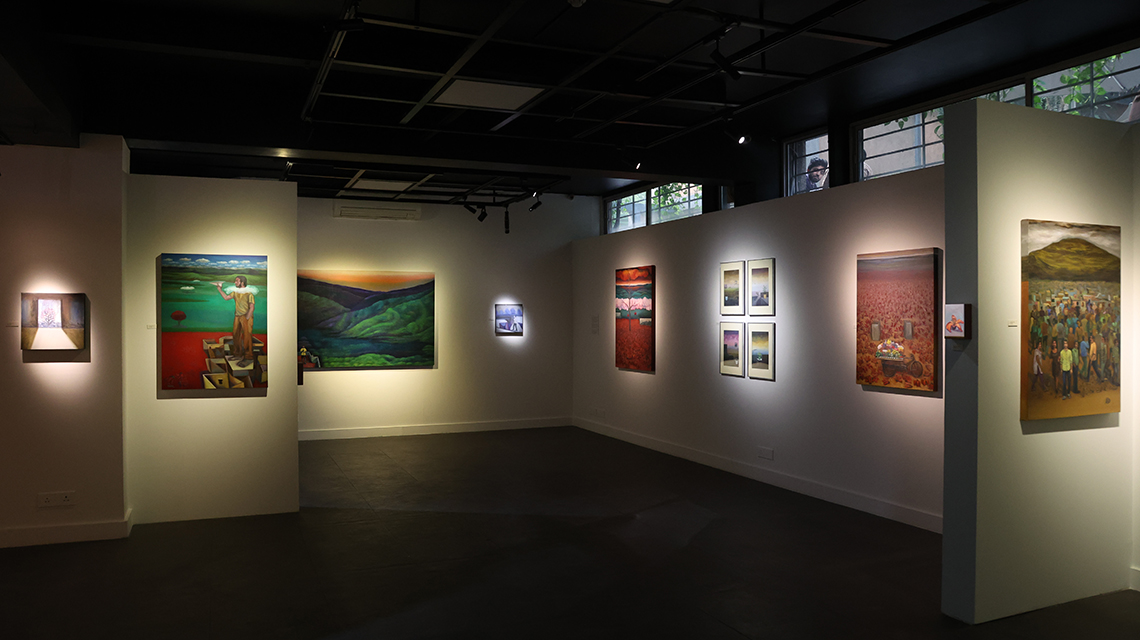
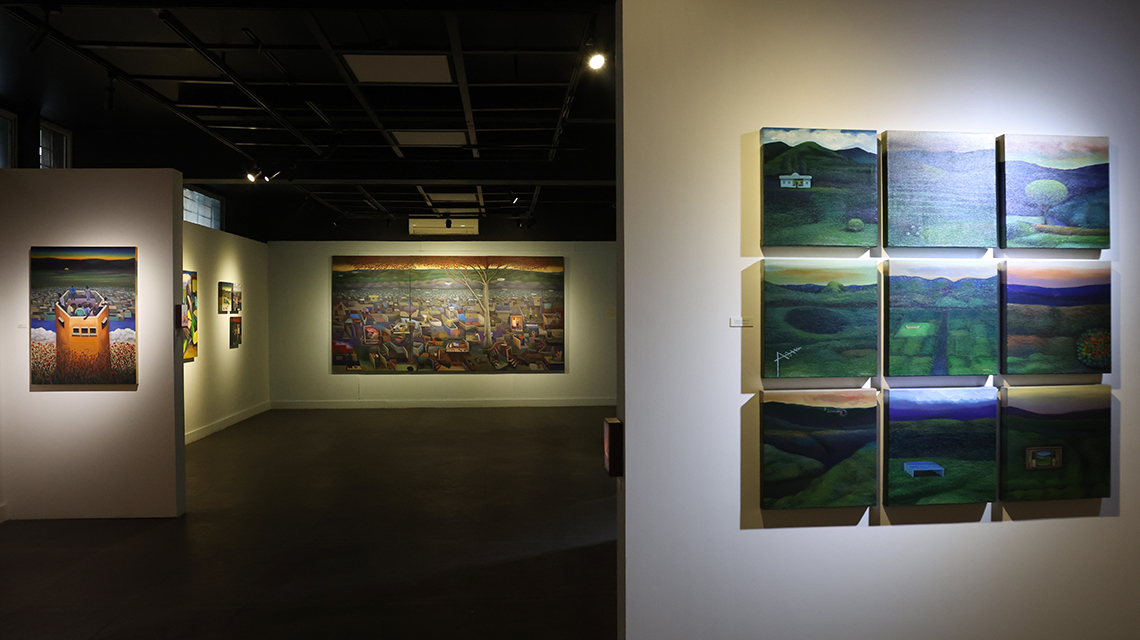
Khandka’s compositions constantly shift their field of view, moving between narrow and broad perspectives. Many of his works are built in distinct registers. In the foreground, a lone figure is brought into focus, still and self-contained, facing forward, observing the viewer. They seem less to engage with the surrounding space than to endure it. Behind this main protagonist, a bustling city comes to life, its structures and inhabitants entwined yet rarely interacting, each absorbed in its own routine. These scenes draw on impressions and remembered glimpses that blend the actual, the fictional and the imagined. The artist is less focused on how people look than on how they behave; less drawn to the details of architecture than to how it all fits together. Beyond the city, the hills of his past rise, and an open horizon insists on depth. Depicted in these works is not only a place but a state of mind and a moment in time. By turning his protagonists to face the viewer, Neeraj directs their gaze toward the unknown future. His works enable a fusion: place and time become inseparable, harmoniously interwoven.
The more intimate works narrow the view to a single detail, and more often than not that detail is nature emerging where it is least expected: a potted plant on a ledge, a peepal splitting concrete, semal blossoms scattered across a rooftop. Khandka describes this as a revival of nature within himself, a way of carrying the landscape of his youth into the life he lives now. For him, these are charged symbols. The semal, whose red flowers fall suddenly onto the city’s concrete, is a metaphor for life and death, and ultimately for hope. The peepal, which forces its way through built structures, stands for resilience. In these small acts of persistence, loss gives way to endurance.
Here, In Another Time, Khandka’s first solo exhibition, marks an arrival at an intermediate point of resolve along a continuing journey. The solitude that defined a past series has given way to something more settled: an acceptance that he belongs to a wider community, and that the past need not be left behind in order to be carried forward.